
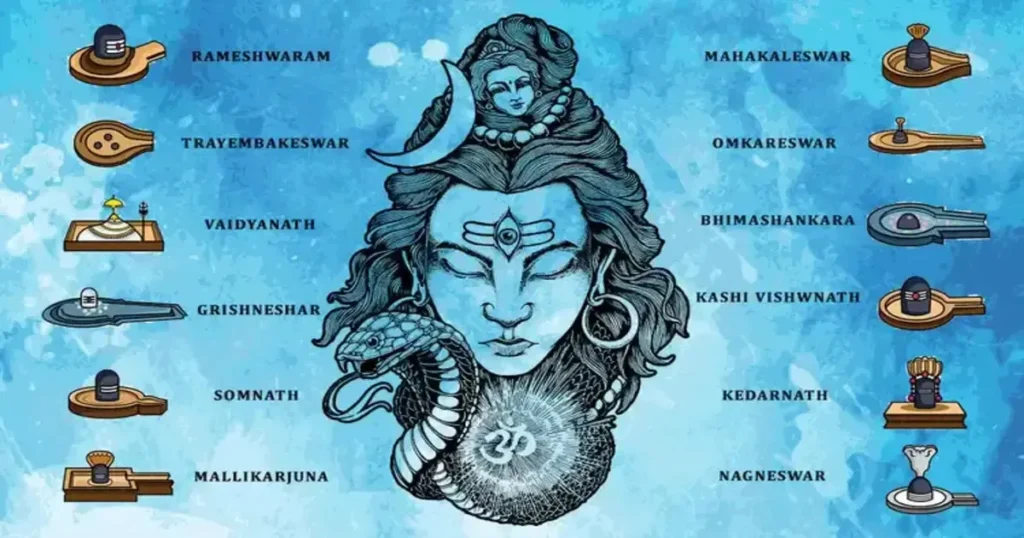
The 12th jyotirlinga name and place is one of the most searched spiritual topics among devotees of Lord Shiva and people exploring India’s religious heritage. Jyotirlingas are not ordinary temples; they are believed to be the most powerful manifestations of Shiva, where he appeared as an endless column of divine light (Jyoti). According to ancient Hindu scriptures, there are exactly twelve such sacred sites spread across India, collectively known as the 12th jyotirlinga list.
Understanding the 12th jyotirlinga name and location is important not only from a religious perspective but also from historical, geographical, and astrological viewpoints. These shrines are located in different states, landscapes, and cultural regions, symbolizing Shiva’s presence everywhere—from mountains and forests to cities and seashores. Each Jyotirlinga represents a unique aspect of life such as creation, destruction, healing, protection, time, or liberation.
What Is a Jyotirlinga?
A Jyotirlinga represents Lord Shiva in his infinite, formless state. Unlike traditional idols, Jyotirlingas symbolize pure cosmic energy. According to the Shiva Purana, Lord Shiva manifested as a pillar of light to end the conflict between Brahma and Vishnu over supremacy. Neither could find its beginning or end, proving Shiva’s infinite nature.
Each Jyotirlinga is believed to radiate a specific spiritual frequency. That is why visiting different 12th jyotirlinga locations creates different inner experiences for devotees. Some feel peace, others healing, while some experience intense spiritual awakening. This concept also connects Jyotirlingas with astrology, where each shrine is linked to a zodiac sign.
Complete 12th Jyotirlinga List With Name and Location
The 12th jyotirlinga name and location list is fixed and universally accepted across Hindu traditions. These twelve shrines together form the backbone of Shaivite pilgrimage in India.
12th Jyotirlinga Name, Location, State, City & Zodiac Sign
| No. | Jyotirlinga Name | State | City / Region | Zodiac Sign |
| 1 | Somnath | Gujarat | Prabhas Patan | Taurus |
| 2 | Mallikarjuna | Andhra Pradesh | Srisailam | Aries |
| 3 | Mahakaleshwar | Madhya Pradesh | Ujjain | Scorpio |
| 4 | Omkareshwar | Madhya Pradesh | Khandwa | Libra |
| 5 | Kedarnath | Uttarakhand | Rudraprayag | Sagittarius |
| 6 | Bhimashankar | Maharashtra | Pune District | Cancer |
| 7 | Kashi Vishwanath | Uttar Pradesh | Varanasi | Leo |
| 8 | Trimbakeshwar | Maharashtra | Nashik | Virgo |
| 9 | Vaidyanath | Jharkhand | Deoghar | Gemini |
| 10 | Nageshwar | Gujarat | Near Dwarka | Capricorn |
| 11 | Rameshwaram | Tamil Nadu | Ramanathapuram | Pisces |
| 12 | Grishneshwar | Maharashtra | Aurangabad | Aquarius |
Overview of All 12 Jyotirlingas
Somnath Jyotirlinga
Somnath Jyotirlinga, located in Gujarat, is considered the first among the twelve. It symbolizes eternity and resilience. Despite being destroyed multiple times throughout history, the temple was rebuilt again and again, representing Lord Shiva’s indestructible nature and the cycle of destruction and rebirth.
Mallikarjuna Jyotirlinga
Mallikarjuna Jyotirlinga is situated in Srisailam, Andhra Pradesh. This shrine represents the divine union of Lord Shiva and Goddess Parvati. Surrounded by dense forests and hills, it is also one of the Shakti Peethas, making it spiritually significant for both Shaivites and Shaktas.
Mahakaleshwar Jyotirlinga
Mahakaleshwar Jyotirlinga is located in Ujjain, Madhya Pradesh. It represents Shiva as Mahakaal, the controller of time and death. This shrine is deeply associated with transformation, reminding devotees of life’s impermanence and the ultimate truth beyond material existence.
Omkareshwar Jyotirlinga
Omkareshwar Jyotirlinga is located on an island in the Narmada River. The island naturally resembles the sacred symbol “Om,” which represents the cosmic sound of creation. This Jyotirlinga symbolizes balance, harmony, and the connection between the material and spiritual worlds.
Kedarnath Jyotirlinga
Kedarnath Jyotirlinga is located high in the Himalayas of Uttarakhand. It represents deep penance, endurance, and spiritual discipline. The challenging journey to Kedarnath symbolizes the hardships one must overcome to attain spiritual wisdom and inner purification.
Bhimashankar Jyotirlinga
Bhimashankar Jyotirlinga is located in Maharashtra’s Sahyadri range. It symbolizes protection and strength. According to legend, Shiva defeated a powerful demon here. The surrounding forests highlight the connection between spirituality and nature in Hindu philosophy.
Kashi Vishwanath Jyotirlinga
Kashi Vishwanath Jyotirlinga is located in Varanasi, Uttar Pradesh. It is believed that worshipping Shiva here grants liberation from the cycle of birth and death. Kashi is considered a timeless city, where spiritual consciousness is said to flow eternally.
Trimbakeshwar Jyotirlinga
Trimbakeshwar Jyotirlinga is located near Nashik, Maharashtra. It is unique due to its three-faced lingam representing Brahma, Vishnu, and Shiva. This shrine is closely associated with purification rituals and ancestral peace, especially during Pitru-related ceremonies.
Vaidyanath Jyotirlinga
Vaidyanath Jyotirlinga is located in Deoghar, Jharkhand. The name means “Divine Healer.” Devotees believe that worshipping Shiva here helps cure physical and mental ailments, making this Jyotirlinga especially important for those seeking health and well-being.
Nageshwar Jyotirlinga
Nageshwar Jyotirlinga is located near Dwarka in Gujarat. It represents protection from negativity and fear. The serpent symbolism associated with this shrine signifies control over poisonous forces, both physical and emotional, that disturb human life.
Rameshwaram Jyotirlinga
Rameshwaram Jyotirlinga is located in Tamil Nadu. It is closely associated with Lord Rama, who worshipped Shiva here before crossing to Lanka. The shrine symbolizes devotion, responsibility, and surrender to divine will.
Grishneshwar Jyotirlinga
Grishneshwar Jyotirlinga is located near the Ellora Caves in Maharashtra. It is the twelfth and final Jyotirlinga, symbolizing simplicity and humility. This shrine emphasizes that true devotion does not depend on grandeur but on sincerity of faith.
Hidden and Lesser-Known Facts About the 12th Jyotirlinga Name and Place
- Somnath was historically linked with lunar calculations, which is why it is associated with the Moon God.
- Mahakaleshwar is the only Jyotirlinga where Shiva faces south, a rare and powerful orientation.
- Kedarnath temple stones are interlocked without cement, yet the structure has survived centuries of natural disasters.
- Trimbakeshwar houses one of the few Jyotirlingas representing all three principal Hindu deities.
- Omkareshwar island forms the ॐ shape when viewed from above, confirmed through satellite imagery.
- Grishneshwar enforces traditional temple customs more strictly than most Jyotirlingas.
Conclusion
The 12th jyotirlinga name and place is far more than a religious list—it is a spiritual map of India. Each Jyotirlinga addresses a different aspect of human existence, from fear and illness to liberation and self-realization. Together, they form a timeless system guiding devotees toward balance, faith, and inner clarity.
FAQs
1. How many Jyotirlingas are there in total?
There are exactly twelve Jyotirlingas mentioned in Hindu scriptures.
2. Which Jyotirlinga is associated with moksha?
Kashi Vishwanath is most closely associated with liberation.
3. Are Jyotirlingas connected with zodiac signs?
Yes, each Jyotirlinga aligns with one zodiac sign.
4. Can Jyotirlingas be visited in any order?
Yes, though traditionally Somnath is visited first.
5. Is Jyotirlinga Yatra suitable for beginners?
Yes, devotion matters more than experience.
Follow US: Facebook, Instagram
You May Also Read: History of Mehtab Bagh Agra, Taj Mahotsav 2026
Golden Triangle Tour With Holi, Kasauli Solan Himachal Pradesh