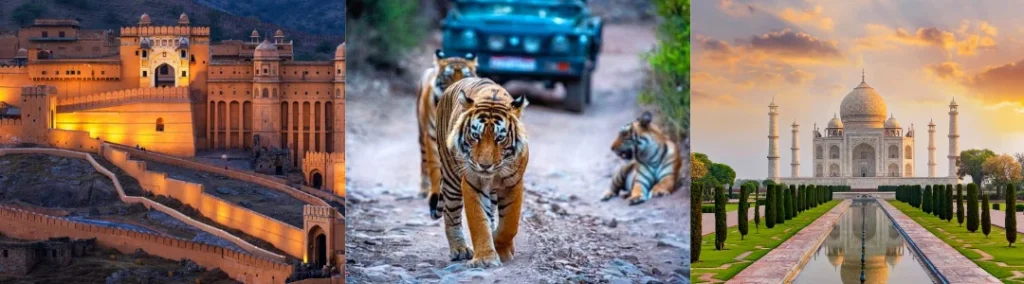

Planning flights to India from Australia? You now have more non-stop choices than you did a year ago, and more seats are arriving this northern winter. The best option depends on your city, budget and dates.
This guide covers routes, airlines, timetable patterns, flight times, visa rules and booking steps. It is written for travellers flying from Sydney, Melbourne, Brisbane, Perth and Adelaide. You can start planning your India trip with Tripstro once you know your route.
Quick Answer: The fastest flights to India from Australia are non-stop services from Sydney and Melbourne to Delhi (Air India) and from Sydney to Bengaluru (Qantas). They take roughly 12 to 13.5 hours. Qantas also flies Melbourne-Delhi seasonally until late March 2027. Other cities connect via a hub in about 15 to 22 hours.
What Are the Best Flights to India from Australia? {#best-flights}
The best flights to India from Australia are non-stop services from Sydney and Melbourne to Delhi, and from Sydney to Bengaluru. They save the most time. If you fly from another city, or you want a lower fare, a one-stop flight through Singapore, Kuala Lumpur or a Gulf hub is the usual choice.
Non-stop flights
Non-stop flights are the fastest way to reach India. As of November 2026, Air India flies Sydney-Delhi and Melbourne-Delhi non-stop. Qantas flies Sydney-Bengaluru non-stop and runs a seasonal Melbourne-Delhi service until late March 2027.
Seasonal means the route is not guaranteed year-round. Check the end date before you book a return flight for next year.
One-stop flights
One-stop flights add a layover, usually in Singapore, Kuala Lumpur, Bangkok, Dubai, Abu Dhabi, Doha or Colombo. They typically cost less and give you more departure times. They also reach cities that have no non-stop link, such as Mumbai, Chennai, Hyderabad, Kolkata and Kochi.
Expert tip: A layover of 90 minutes to 3 hours is usually a safe window for a single ticket. Anything shorter risks a missed connection. Anything much longer erases the time you saved.
Table 1: Australia to India route overview (as of November 2026)
| From | To | Typical flight type | Approx. duration | Typical frequency |
|---|---|---|---|---|
| Melbourne | Delhi | Non-stop (Air India; seasonal Qantas to late Mar 2027) | About 12-13 hours | Air India about 10-11 weekly in winter 2026/27; Qantas about 3 weekly last season |
| Sydney | Delhi | Non-stop (Air India) | About 12.5-13 hours | Several weekly, with an increase planned from December 2026 |
| Sydney | Bengaluru | Non-stop (Qantas) | About 13-13.5 hours | Several weekly; service resumed after a pause to 24 Oct 2026 |
| Brisbane, Perth, Adelaide | Delhi, Mumbai and others | One-stop | About 15-22 hours | Daily options via Asian or Gulf hubs |
| Sydney, Melbourne | Mumbai, Chennai, Hyderabad, Kolkata, Kochi | One-stop | About 16-22 hours | Daily options |
Schedules change seasonally, so always confirm on the airline or booking platform before purchase.
Major Australian Departure Cities and Indian Arrival Airports {#cities-airports}
Sydney and Melbourne are Australia’s main gateways to India, with non-stop flights and the most one-stop options. Brisbane, Perth and Adelaide have no non-stop India flights, so you connect through an Asian or Gulf hub. In India, Delhi, Mumbai and Bengaluru are the busiest arrival airports.
Australian departure cities
- Sydney (SYD): Non-stop to Delhi and Bengaluru. Many one-stop options.
- Melbourne (MEL): Non-stop to Delhi. Strong one-stop choice to every major Indian city.
- Brisbane (BNE): One-stop only. Often routed through Singapore or Kuala Lumpur.
- Perth (PER): One-stop only. Perth sits closer to Asia, so some itineraries are shorter than from the east coast.
- Adelaide (ADL): One-stop only, usually via Singapore, Kuala Lumpur or a Gulf hub.
Indian arrival airports
- Delhi (DEL, Indira Gandhi International): Gateway to Agra, Jaipur, Rajasthan and the Himalayas.
- Mumbai (BOM, Chhatrapati Shivaji Maharaj International): Best for Maharashtra, Goa and business travel.
- Bengaluru (BLR, Kempegowda International): Best for Karnataka, Mysuru and South India.
- Chennai (MAA), Hyderabad (HYD), Kolkata (CCU): Good for Tamil Nadu, Telangana and the east.
- Kochi (COK): The entry point for Kerala’s backwaters and hill stations.
- Amritsar (ATQ): The closest airport to the Golden Temple and the Punjab.
Expert tip: Choose your arrival airport by your first destination, not by the cheapest fare alone. A cheap flight into Delhi can cost you a day if your trip is in Kerala.
Airlines Flying from Australia to India {#airlines}
Two airlines operate non-stop flights between Australia and India: Air India and Qantas. Many other carriers offer one-stop flights through their hubs. Which one suits you depends on your route, baggage needs, layover preference and fare conditions. Confirm current schedules with each airline before booking.
Airlines with non-stop service
- Air India: Non-stop Sydney-Delhi and Melbourne-Delhi. It has been adding Melbourne capacity this winter and has introduced upgraded cabins on that route.
- Qantas: Non-stop Sydney-Bengaluru and seasonal Melbourne-Delhi. It also offers onward connections inside India through a codeshare partner.
Airlines commonly used for one-stop trips
- Southeast Asia hubs: Singapore Airlines, Malaysia Airlines and Thai Airways connect through Singapore, Kuala Lumpur and Bangkok.
- Gulf hubs: Emirates (Dubai), Etihad (Abu Dhabi) and Qatar Airways (Doha) serve many Indian cities.
- Other options: SriLankan Airlines flies via Colombo, which suits South India.
Before choosing a Gulf or Asian hub, check your government’s travel advisory for any disruption. The Australian Government’s Smartraveller service is the official source.
International Flights to India from Australia: Timetable {#timetable}
Timetables for international flights to India from Australia follow seasonal patterns. Non-stop services run several days a week, and some are seasonal. Departures from Australia are usually in the morning or evening, and arrivals in India land the same day or the next morning. Always check the exact times with the airline.
You will find the exact departure and arrival times on the airline’s site. The table below shows patterns only, not guaranteed times.
Table 2: Sample weekly timetable pattern (northern winter 2026/27)
| Route | Typical days of operation | Typical departure window | Typical arrival window |
|---|---|---|---|
| Melbourne-Delhi (Air India) | Near-daily in winter, with more flights than last season | Varies by day and aircraft; check the airline timetable | Varies; check the airline timetable |
| Melbourne-Delhi (Qantas, seasonal) | About three days a week last season; confirm current days | Morning (last season’s pattern) | Late afternoon, same day in local time (last season’s pattern) |
| Sydney-Delhi (Air India) | Several days a week, with an increase planned from December 2026 | Varies; check the airline timetable | Varies; check the airline timetable |
| Sydney-Bengaluru (Qantas) | Several days a week; published schedule runs from late October 2026 | Check the airline timetable | Check the airline timetable |
| One-stop via Asia or the Gulf | Daily | Often evening or overnight | Often next morning to afternoon, depending on the layover |
Schedules change seasonally, so always confirm on the airline or booking platform before purchase.
How to read an India flight timetable
Australia is several hours ahead of India, so the clock changes when you land. A flight that leaves Melbourne in the morning can arrive in Delhi the same afternoon on local time.
- Look at the time zone shown beside each time.
- Check the days of operation, because not every flight runs daily.
- Check the “valid from” and “valid to” dates, especially for seasonal routes.
Expert tip: Take a screenshot of your confirmed timetable at booking. Airlines retime flights between seasons, and you will want proof of the original time if you need to ask for a change.
Flight Duration and Distance by Route {#duration}
Non-stop flights from Sydney or Melbourne to Delhi take roughly 12 to 13 hours. Sydney to Bengaluru takes about 13 to 13.5 hours. One-stop itineraries usually take 15 to 22 hours. Sydney to Delhi covers roughly 10,400 km in a straight line.
Four things change your total travel time:
- Layover length. A 1-hour connection and a 6-hour connection can differ by five hours.
- Direction of travel. Wind patterns can make one direction slightly longer.
- Aircraft type and routing. Different aircraft and flight paths change the block time.
- Airport time. Add time for check-in, security and immigration at both ends.
Perth travellers can sometimes find a shorter one-stop trip than east-coast travellers, because Perth is closer to Asia. Compare the full journey time, not just the flight time.
Best Time to Fly and Cheapest Months to Book {#best-time}
The cheapest months to fly to India from Australia are typically outside school holidays and the December-January peak. Many travellers find lower fares in February-March and May-September. The most comfortable weather for most regions is October to March, so there is a trade-off between price and climate.
Table 3: Month-by-month season and fare guide (typical patterns)
| Months | India weather | Demand and fares | Good for |
|---|---|---|---|
| Dec-Jan | Cool in the north; Delhi fog can delay flights | Peak: Australian summer holidays, weddings | Rajasthan, Goa, South India |
| Feb-Mar | Pleasant, warming up | Often easier after school holidays | Golden Triangle, Kerala |
| Apr-May | Hot in the north | Moderate, with a spike in Easter school holidays | Hill stations, Himalayas |
| Jun-Sep | Monsoon in most regions | Often lower fares | Ladakh, Kerala monsoon stays |
| Oct-Nov | Post-monsoon, festival season | Rising, especially around Diwali | Festivals, culture, most regions |
These are general patterns. Fares vary by year, route and airline.
Expert tip: If you must travel in December or January, book early and avoid tight connections through Delhi. Winter fog can disrupt morning flights.
How to Find Cheap Flights to India from Australia {#cheap-flights}
To find cheap flights to India from Australia, compare nonstop and one-stop fares, search flexible dates and book outside peak periods. Sale fares in 2026 have appeared from roughly A$1,000 return on some routes, but peak-season fares are often well above that. Use these steps to find the best price.
- Search flexible dates. Moving your trip by two or three days can change the fare noticeably.
- Compare nearby airports. Check both Sydney and Melbourne if you can reach either.
- Compare non-stop with one-stop. A one-stop fare often saves money, but check the extra hours.
- Avoid school holiday weeks. Demand rises sharply in December-January and in April, July and September-October school breaks.
- Set fare alerts. Track your route for a few weeks to learn the normal price.
- Check baggage rules. A cheap fare with no checked bag can cost more than a standard fare.
- Consider an open-jaw ticket. Flying into Delhi and out of Mumbai can save a day of backtracking.
- Book directly or through a trusted agent. Check the total price, including fees, before you pay.
Visa, Passport, Health and Baggage Essentials {#visa}
Australian citizens need a visa for India, and most tourists apply for an e-Visa online. Apply at least four days before arrival and up to 120 days ahead. Your passport should have at least six months of validity. You must also complete a free e-Arrival Card within 72 hours before you land.
India e-Visa for Australians
- Options: The portal offers 30-day, one-year and five-year e-Tourist visas.
- Cost: Fees vary by visa type and season, and have ranged from about US$25 to US$80. Confirm the current fee on the official portal.
- Timing: Apply well before your trip. Processing is often a few days, but peak periods can be slower.
- Official source: Use only the Indian government’s e-Visa portal. Copycat websites exist and charge extra.
e-Arrival Card
The e-Arrival Card is separate from your visa. It is free, and you complete it online within 72 hours before arrival. Do not pay a third-party site to do it for you.
Passport, health and baggage
- Passport: Check validity and blank pages before you book.
- Health: See your doctor for routine vaccines and travel advice. A yellow fever certificate is needed only if you arrive from, or transit through, a country with yellow fever risk within six days.
- Insurance: Take travel insurance that covers medical care and cancellations.
- Baggage: Allowances differ by airline, fare and route. Check the rules on your ticket.
- Customs: Declare restricted items and check India’s current customs rules before you pack.
- Official advice: Check DFAT’s Smartraveller page for India before you go.
Expert tip: Save your e-Visa approval and e-Arrival Card confirmation as PDFs on your phone and carry a printed copy. Airport Wi-Fi is not always reliable.
How to Book Your Flight, Step by Step {#booking}
To book flights to India from Australia, choose your route and dates, check your visa timing, compare fares, and book a fare with the baggage and change rules you need. Then confirm your itinerary and apply for your e-Visa. Follow these steps in order.
- Pick your arrival city. Choose the Indian airport closest to your first stop.
- Check the visa window. Confirm you can get your e-Visa at least four days before arrival.
- Compare routes. Look at non-stop and one-stop options for your dates.
- Check total cost. Add baggage, seat selection and any booking fees.
- Read the fare rules. Look at change fees, refund terms and minimum connection times.
- Book on one ticket. A single booking protects you if a connection is missed.
- Confirm the itinerary. Check names against your passport, and save the confirmation.
- Apply for your e-Visa and plan onward travel. Then book hotels, transfers and tours.
If you want help with the India side of the trip, Tripstro can help you plan routes, stays and transfers around your flight dates.
Comparison: Non-Stop vs One-Stop vs Open-Jaw Flights {#comparison}
Non-stop flights are fastest and most comfortable. One-stop flights usually cost less and offer more dates and cities. Open-jaw tickets suit multi-city trips by letting you arrive and depart from different Indian airports. The right choice depends on your budget, your time and your itinerary.
Table 4: Comparison of flight options
| Option | Typical price range | Total travel time | Comfort | Best for |
|---|---|---|---|---|
| Non-stop | Higher; compare against one-stop | About 12-13.5 hours | Highest: one flight, no connection | Families, older travellers, short trips |
| One-stop | Often lower, but varies by season | About 15-22 hours | Moderate: layover and possible airport change | Budget travellers, Brisbane/Perth/Adelaide departures |
| Open-jaw or multi-city | Varies; can be higher on some routes | Depends on route | Good for avoiding backtracking | Long trips covering several regions |
If the fare difference is small, the non-stop option usually gives better value for your time. If the saving is several hundred dollars, a one-stop flight can be worth the extra hours.
After You Land: Connecting to Popular India Trips {#after-landing}
Most travellers from Australia land in Delhi, then continue to Agra, Jaipur or beyond. Delhi is the gateway to the Golden Triangle of Delhi, Agra and Jaipur. Plan at least one buffer night after a long flight, and book your first transfers in advance.
Easy first trips from Delhi
- Golden Triangle: Delhi, Agra and Jaipur make a classic first-time route.
- Rajasthan: Extend from Jaipur to Udaipur, Jodhpur and Jaisalmer.
- Himalayan foothills: Rishikesh and Dehradun are within reach of Delhi.
A popular option for travellers short on time is a same day tour to Agra from Jaipur, which ends with a transfer to Delhi. It lets you see the Taj Mahal and still reach your onward flight.
Expert tip: Do not book a tight onward flight on the day you arrive. Long-haul arrivals, immigration queues and Delhi traffic add up. Keep a buffer of at least four hours for same-day connections, and more in winter.
FAQs About Flights to India from Australia {#faqs}
Are there direct flights from Australia to India?
Yes. Air India flies non-stop from Sydney and Melbourne to Delhi, and Qantas flies non-stop from Sydney to Bengaluru. Qantas also runs a seasonal Melbourne-Delhi service until late March 2027. Brisbane, Perth, Adelaide and other cities have no non-stop flights to India, so you connect through a hub.
How long is the flight from Australia to India?
Non-stop flights from Sydney or Melbourne to Delhi or Bengaluru typically take about 12 to 13.5 hours. One-stop itineraries usually take 15 to 22 hours, depending on your layover hub and connection time. Flights from Perth can be shorter than east-coast options because the city is closer to Asia.
Which airlines fly from Australia to India?
Air India and Qantas operate non-stop services. Many other airlines offer one-stop flights, including Singapore Airlines, Malaysia Airlines, Thai Airways, Emirates, Etihad, Qatar Airways and SriLankan Airlines, depending on the route and season. Confirm current schedules with each airline before you book.
What is the cheapest month to fly to India from Australia?
Fares are typically lowest outside school holidays and the December-January peak. Many travellers find better prices in February to March and in the shoulder months of May to June and August to September. Prices vary by year, so compare dates using a flexible search.
Do Australians need a visa for India?
Yes. Australian passport holders need a visa, and most tourists apply for an e-Visa online. Apply at least four days before arrival and up to 120 days ahead. You also need a passport valid for at least six months. Use only the official Indian government portal to avoid copycat sites.
What is the e-Arrival Card for India?
The e-Arrival Card is a free online form that foreign visitors complete within 72 hours before landing in India. It is arrival information, not a visa, and it does not replace your e-Visa. Complete it on the official portal and keep the confirmation with your passport.
Which Australian city has the best flights to India?
Melbourne and Sydney have the best choice, with non-stop flights to Delhi and, from Sydney, to Bengaluru. Both cities also have many one-stop options to Mumbai, Chennai, Hyderabad and Kolkata. Travellers from Brisbane, Perth and Adelaide connect through hubs such as Singapore, Kuala Lumpur or the Gulf.
How far ahead should I book flights to India?
For peak travel in December, January and school holidays, book about four to six months ahead. For off-peak months, two to three months is usually enough. Set fare alerts early, and book once a fare fits your budget, because seats on non-stop flights can fill quickly.
Is it better to fly non-stop or with a stopover?
Non-stop flights save several hours and suit families, older travellers and short trips. One-stop flights often cost less and give more departure times and city choices. If your fare saving is small, the non-stop option usually offers better value for your time.
Can I fly into one Indian city and out of another?
Yes. Open-jaw tickets let you land in Delhi and depart from Mumbai, for example. They can save backtracking on a multi-city trip. Compare the price with a return ticket, because some airlines charge more for open-jaw itineraries on certain routes.
Conclusion {#conclusion}
The best flights to India from Australia in 2026-27 are the non-stop services from Sydney and Melbourne to Delhi and from Sydney to Bengaluru. If you fly from another city or want a lower fare, a one-stop flight is a solid alternative. Check seasonal end dates, sort out your e-Visa early, and keep buffer time after you land.
Ready to turn your flight into a full trip? Talk to India’s best travel agency to plan stays, transfers and tours that match your arrival dates.